
Fill Thin Spots and Build Lawn Density
Professional seeding to repair winter damage and improve turf thickness in Lake Elmo.
Your lawn develops thin areas over time due to winter damage, seasonal stress, or heavy foot traffic, and those bare patches make the entire property look uneven and neglected. New Horizon Minnesota provides professional seeding designed to fill those gaps and improve overall lawn density in Lake Elmo, using timing strategies aligned with Minnesota's growing conditions to support stronger germination and root development that lasts beyond a single season.
The service involves spreading high-quality grass seed across thin or bare areas, often in combination with aeration to improve seed-to-soil contact and increase germination rates. Seeding is scheduled during periods when soil temperature, moisture, and daylight hours support active growth, which typically means spring or early fall in this region. This approach helps repair damage caused by snow mold, freeze-thaw cycles, and the general wear that Minnesota lawns experience each year.
If your lawn has patches that never green up or areas where weeds fill in faster than grass, get in touch with New Horizon Minnesota to discuss seeding options tailored to Lake Elmo conditions.
How Seeding Improves Turf Over Time
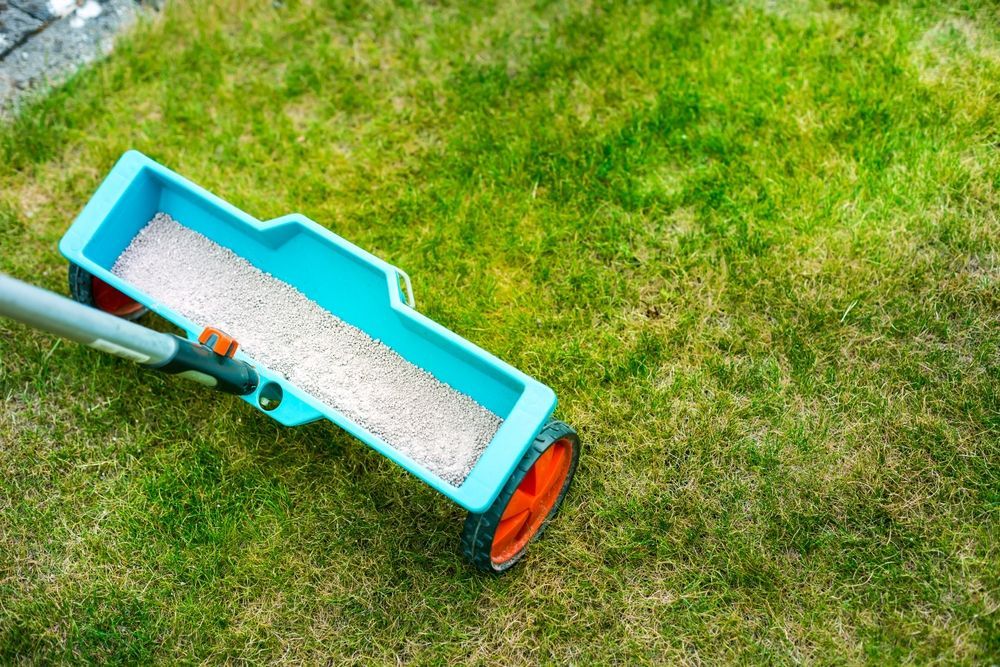
Seed is spread using a broadcast spreader or slit seeder, depending on whether the lawn was recently aerated or needs deeper penetration into compacted soil. After application, the seed is lightly raked or left to settle into aeration holes, and you will be advised to water daily for the first two weeks to keep the soil surface moist while seeds germinate. New grass typically emerges within seven to fourteen days, depending on temperature and moisture levels.
Once the seed has germinated and grown to mowing height, you will see thicker, more uniform turf where bare patches used to dominate. The lawn fills in more evenly, reducing the space available for weeds and improving how the property looks from the street or backyard.
Seeding works best when paired with aeration, which creates openings for seed to take root, but it can also be done on its own if your soil is already loose or if you are targeting small areas. The service does not address underlying drainage problems, soil pH imbalances, or pest infestations, but it does provide the raw material your lawn needs to recover and densify over time.
Homeowners usually want to know about timing, watering requirements, and how long it takes before they can mow or use the lawn normally again after seeding.
What People Ask Before Scheduling
When should seeding be done in Minnesota?
Early fall is ideal because soil is warm, moisture is predictable, and cooler air reduces stress on new grass. Spring seeding works but competes with weeds and requires more careful watering as temperatures rise.
How much watering does new seed need?
You should water lightly once or twice a day to keep the soil surface moist without creating puddles. Once the grass reaches about two inches, you can reduce frequency and water more deeply to encourage root growth.
Why pair seeding with aeration?
Aeration creates small holes where seed can settle into direct contact with soil, which improves germination rates and reduces the chance of seed washing away. Seeding without aeration often results in lower success rates, especially on compacted lawns.
How long before the lawn can be mowed after seeding?
New grass should reach about three to four inches before the first mowing, which usually takes three to four weeks. Mowing too early can pull seedlings out of the ground before roots are established.
What if weeds grow in the seeded areas?
Some weed growth is normal after seeding because disturbed soil brings dormant seeds to the surface. Most broadleaf weed treatments cannot be applied until new grass is mowed at least twice, so you may need to tolerate weeds temporarily while the lawn establishes.
New Horizon Minnesota has seen how much seeding improves lawn density and appearance across Lake Elmo properties, especially when timed correctly and paired with aeration. If you want to repair thin areas and reduce weed pressure over the long term, contact us to schedule a free estimate and discuss the best timing for your lawn.